
Beyond Basic Literacy: Reimagining Digital Inclusion & the Psychosocial Rails for Youth Productivity
For years, the conversation surrounding digital inclusion across South Africa’s socio-economic landscape has been shaped around a single, persistent narrative: access.
Progress has been measured by an increase in optic cables laid, the number of public Wi-Fi zones installed and the rate of distribution of internet-enabled devices to marginalised youth. Yet, a fundamental contradiction remains. Despite expanded digital infrastructure, young South Africans are overwhelmingly positioned at the tail end of the global digital economy: mostly as passive consumers of foreign platforms rather than active builders, owners or market innovators.
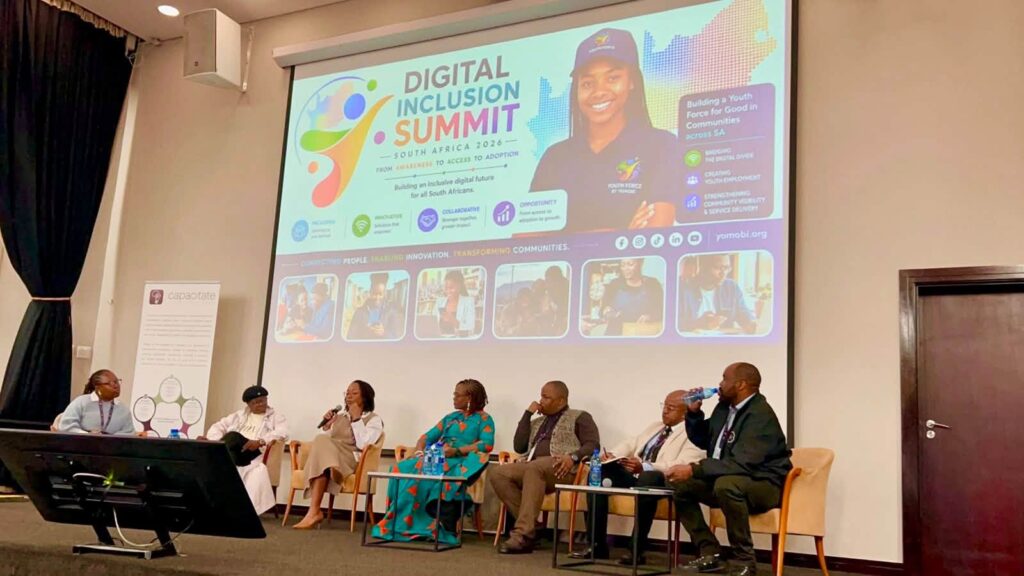
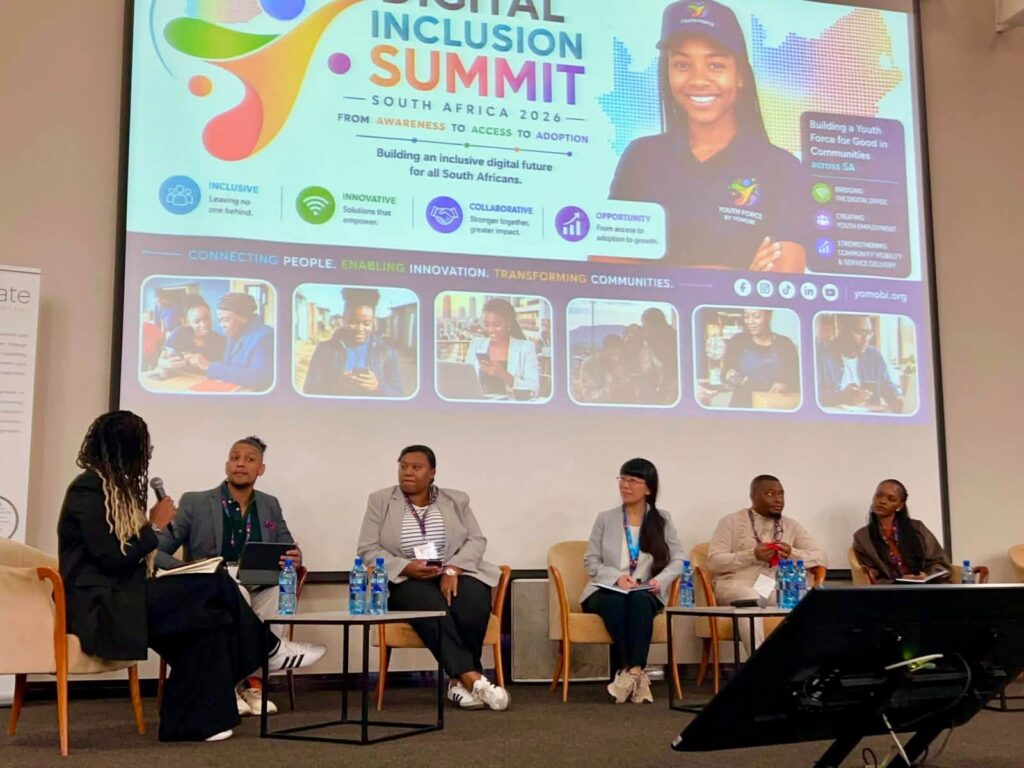
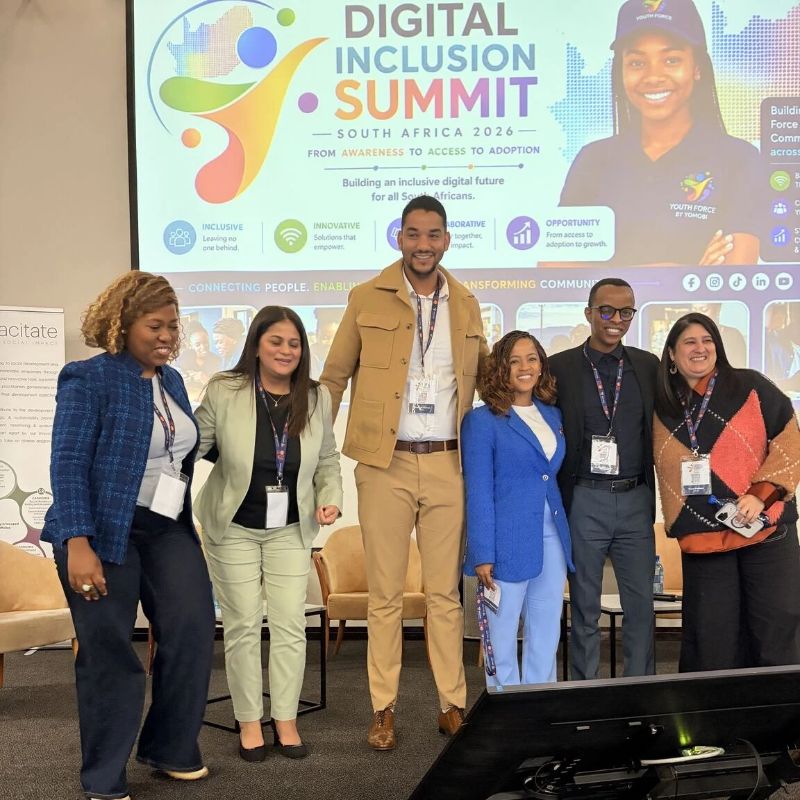
At the recent Digital Inclusion Summit that took place on 9 September 2026, Lucha Lunako’s Head of Business Development, Zinhle Phakathi, moderated a panel discussion interrogating the digital skills inclusion gap. The conversation included perspectives from global tech giants Google, Microsoft and Canva, edutech leader Edunova and national digital and media powerhouse Naspers.
The heart of the discussion was to identify the ways the digital divide continues to pervade South African society, address psychosocial barriers that hold back youth tech ownership and explore approaches to bridge the gap by shifting the focus from basic digital literacy to productive digital capability.
The Consumption Trap vs. Productive Capability
To understand why traditional digital inclusion initiatives stall, we must examine how young people currently interact with technology versus how corporate ecosystems deploy capital.
A young person scrolling through TikTok or navigating social feeds demonstrates basic digital fluency. However, using a platform is vastly different from leveraging technology to produce economic value. While global platforms pull data, audience engagement and advertising revenue out of emerging markets, local youth receive minimal economic return. This asymmetry creates a consumption trap.
This dynamic is further reinforced by what is called the Pacification Economy. South Africa’s youth ecosystem heavily relies on short-term corporate grants, learnerships and stipends, which keep youth in a state of subsidised survival. Big Tech skills programmes often measure success by course completion certificates rather than whether a young person generates self-sustaining income or builds a micro-enterprise. True digital inclusion requires equipping youth with the productive capability to use software, enterprise tools, artificial intelligence and digital channels to create products, deliver services and enter high-value supply chains.
The Psychosocial Barrier to Tech Ownership
Tech companies build sophisticated Go-To-Market strategies using consumer behavioural psychology to drive screen time, monetisation and user acquisition. However, virtually no one builds Go-To-Productivity frameworks designed to overcome limiting beliefs, low digital confidence and systemic, historical trauma.
South African black youth carry a sense of agency that has been structurally fractured by legacy systems. When Big Tech drops a coding course, cloud portal, or AI tool into a township without addressing psychosocial readiness, the conversion rate to actual entrepreneurship remains near zero. Technical training delivered in isolation without holistic human support, confidence-building, and emotional regulation frameworks fails to yield sustained productive output.
Furthermore, it does not tell the full story when rare outliers who raised foreign venture capital are used as the benchmark to demonstrate social impact success. The goal is not to make every township youth a venture-backed tech unicorn. The real economic engine lies in enabling the Missing Middle: driving economic mobility upward, mid-tier digital agency and sustainable livelihoods at scale.
The Psychosocial Barrier to Tech Ownership
Tech companies build sophisticated Go-To-Market strategies using consumer behavioural psychology to drive screen time, monetisation and user acquisition. However, virtually no one builds Go-To-Productivity frameworks designed to overcome limiting beliefs, low digital confidence and systemic, historical trauma.
South African black youth carry a sense of agency that has been structurally fractured by legacy systems. When Big Tech drops a coding course, cloud portal, or AI tool into a township without addressing psychosocial readiness, the conversion rate to actual entrepreneurship remains near zero. Technical training delivered in isolation without holistic human support, confidence-building, and emotional regulation frameworks fails to yield sustained productive output.
Furthermore, it does not tell the full story when rare outliers who raised foreign venture capital are used as the benchmark to demonstrate social impact success. The goal is not to make every township youth a venture-backed tech unicorn. The real economic engine lies in enabling the Missing Middle: driving economic mobility upward, mid-tier digital agency and sustainable livelihoods at scale.
Overcoming Knowledge Gaps
1. To build bulletproof strategies, corporate South Africa and tech partners must confront prevailing assumptions:
- The Myth of Continental Replication: Models working in Kenya (M-Pesa) or Nigeria (informal market digitisation) cannot simply be plug-and-played into South Africa. SA’s economy is defined by entrenched corporate oligopolies in banking, retail, and telecommunications. A township innovator doesn’t just compete with peers; they compete with massive corporate players while navigating strict regulatory frameworks.
2. Empirical Validation:
- The IFC and World Bank’s private-sector arm estimates that over 230 million jobs in Sub-Saharan Africa will require digital skills by 2030, stressing that these must be paired with 21st-century social and behavioural skills such as critical thinking and communication.
- A Mastercard Foundation study suggests digital commerce and the gig economy could reshape the livelihoods of up to 80 million African workers, while cautioning that growth in digital platforms alone doesn’t guarantee good employment outcomes.
- Harambee Youth Employment Accelerator reports that discouraged job-seekers make up 80.2% of South Africa’s potential labour force and argues young people need concrete bridges into work, including self-employment pathways to move into sustainable economic participation.
Building Pathways Together
To translate software platforms into real-world economic output and productivity, Lucha Lunako offers Big Tech and Corporate SA the critical Human Operating System.
Key Questions to Consider Regarding Inclusion and Youth Economic Participation:
- Localisation & Income Generation: When you build localisation strategies for South Africa, how are you measuring success beyond user sign-ups? What explicit features or revenue-share models ensure young local creators earn sustainable, cross-border income?
- AI Readiness & Mass Mobility: AI promises to level the playing field, but it requires high agency, critical thinking and confidence. How do your skilling programmes address the psychosocial gaps that prevent underserved youth from stepping up as power-users rather than passive consumers?
- The Shared Value Model: If software is the infrastructure, human readiness is the transmission. How can platform owners partner with ground-level delivery operators like Lucha to solve the behavioural side of tech adoption and turn software licenses into active, paying power-users?
Moving Forward Together
Tools don’t build businesses or drive corporate supply chains; confident, agency-driven people do. Lucha Lunako remains committed to driving interventions that treat young people not merely as CSR statistics in a digital access report, but as key drivers of economic transformation. The answer cannot be found in a single organisation, or in a single intervention.
What might be some of the ways your company may be rethinking digital inclusion, bridging the skills divide and incorporating multi-faceted approaches to create a platform for youth to actively engage in the economy?


